March 25th, 2025, Dursey Island, West Cork, Ireland
Full series available on Hans Lucas : click here to unveil the beauty of Dursey Island
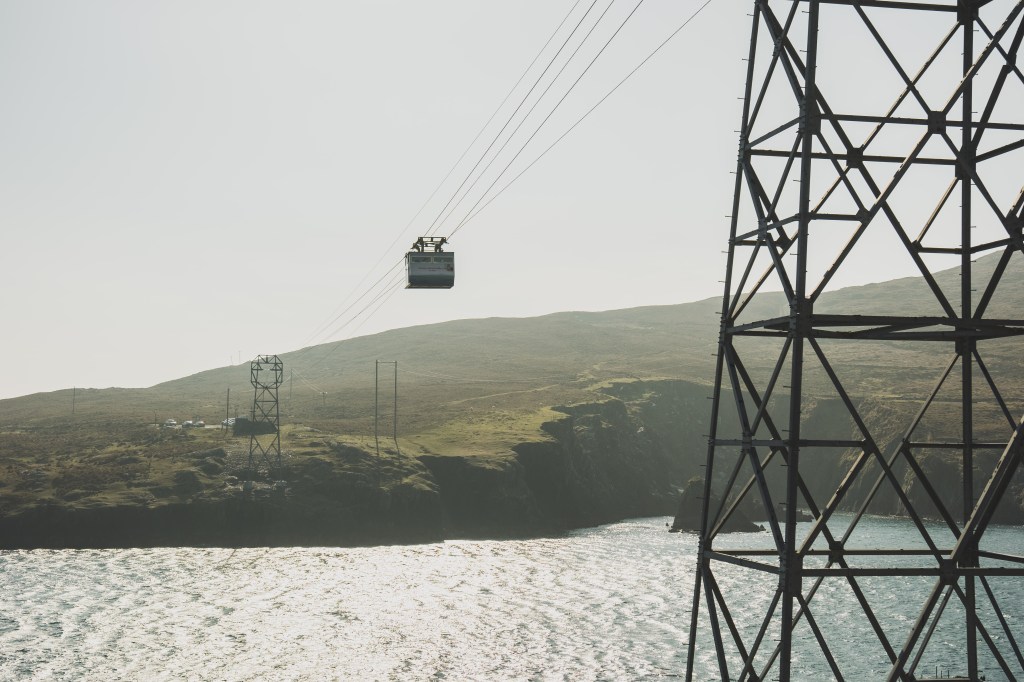
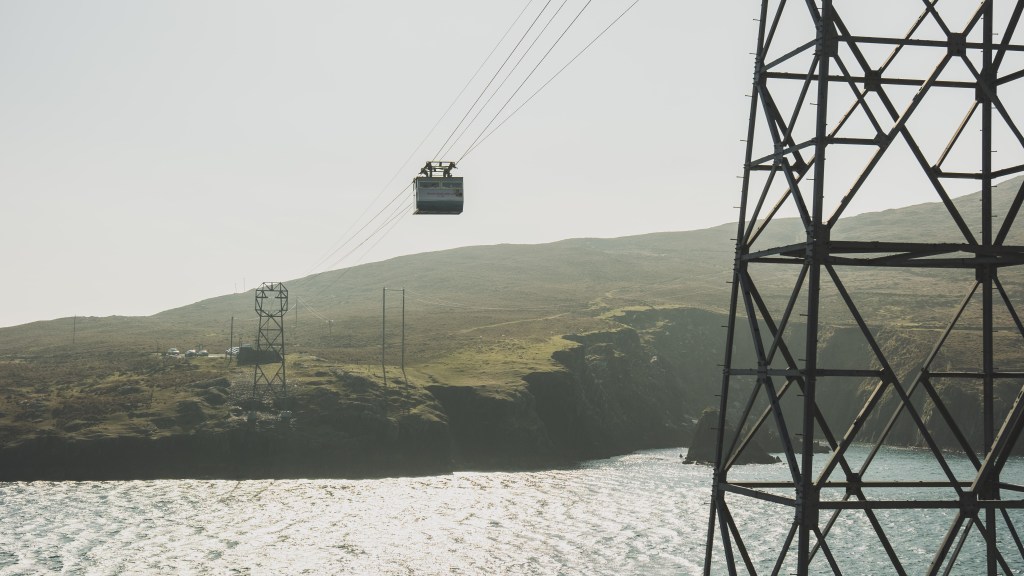
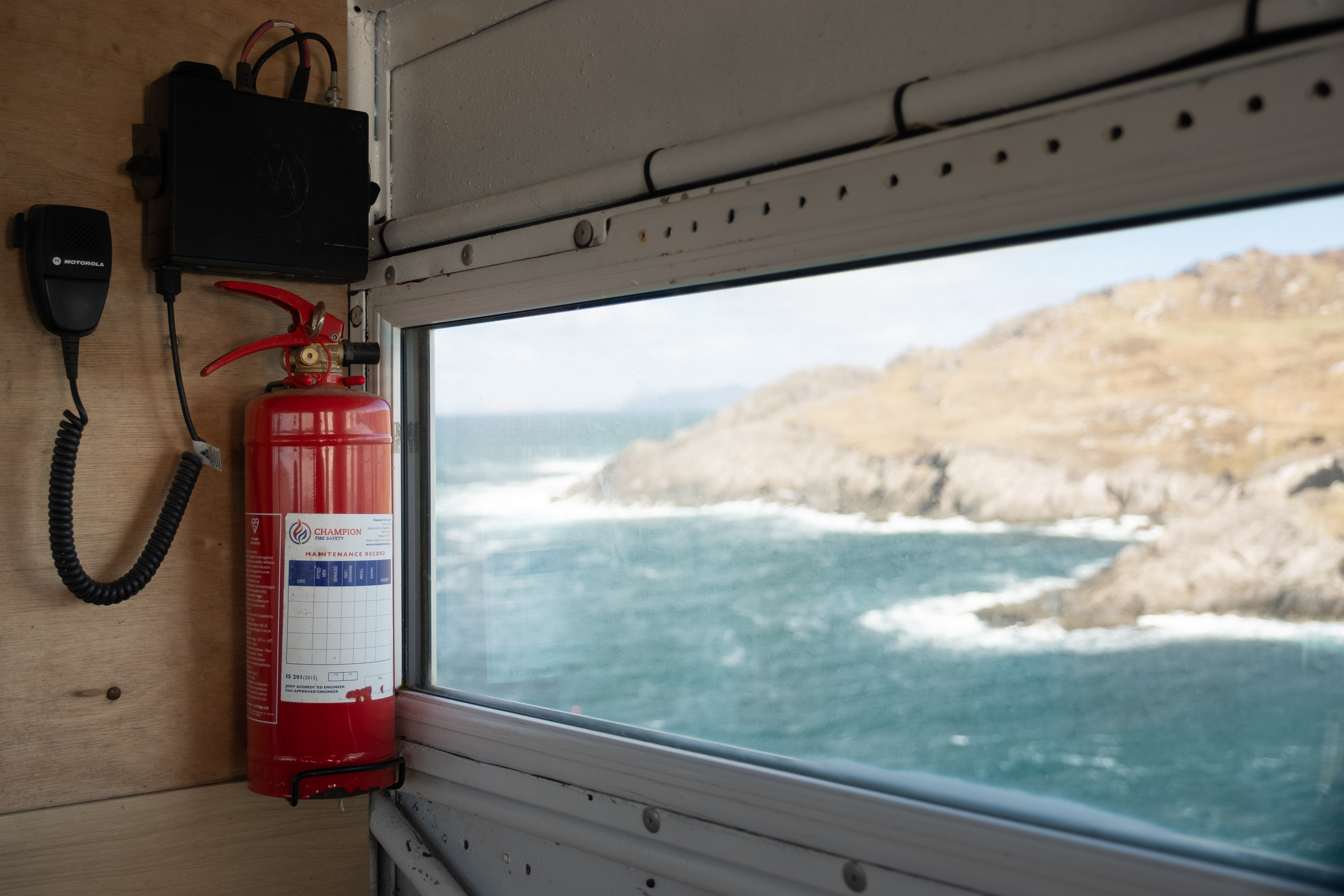
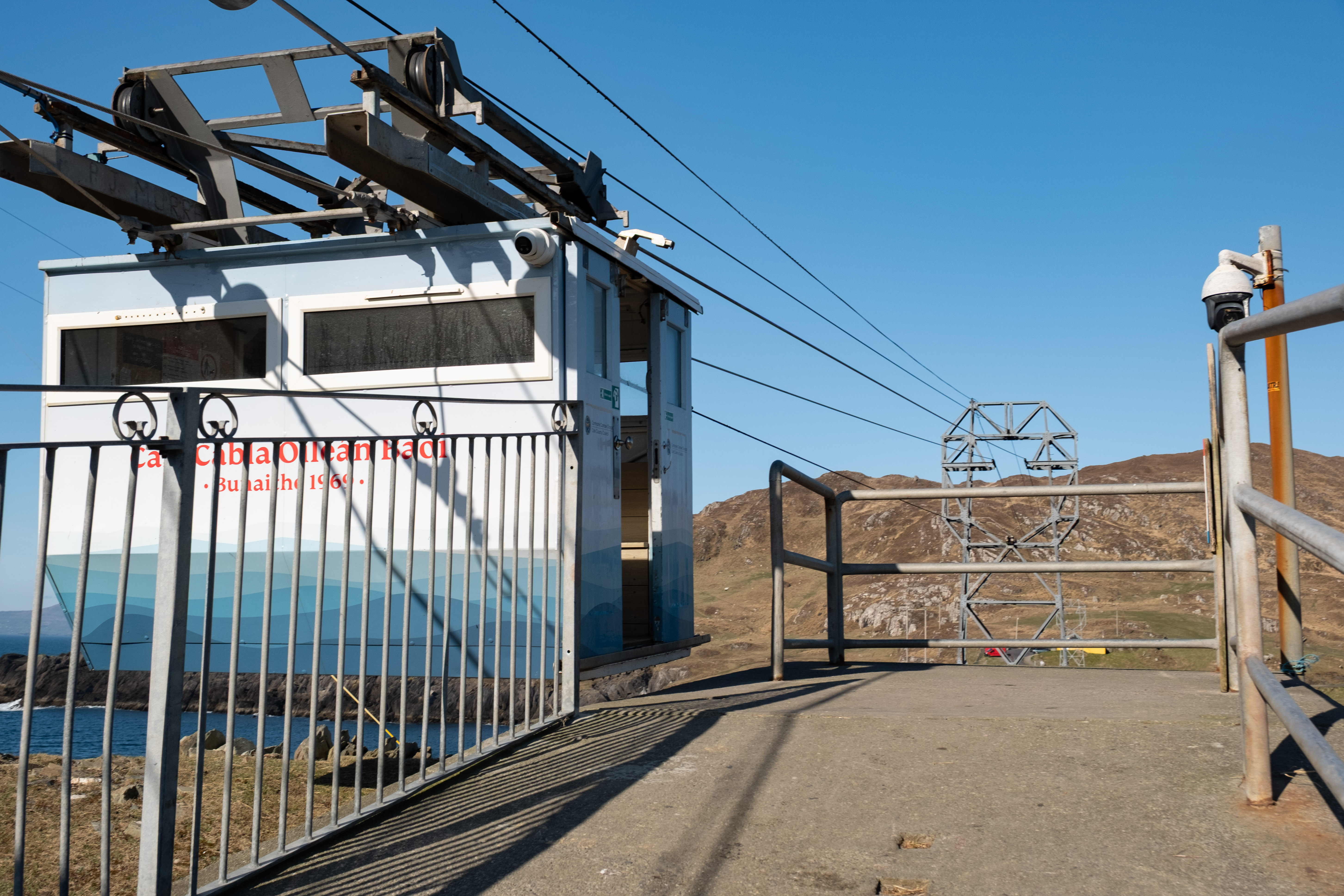
The cable car sways over the churning water, a lone link between the mainland and Dursey Island, separated by 200 meters. Inside, there are no tourists. Just the hum of the pulley and the wind whistling through the crack. A psalm, a rusted hook, a fire extinguisher and a radio are my only safety tools for this 10-minute trip above the wild Atlantic waves.

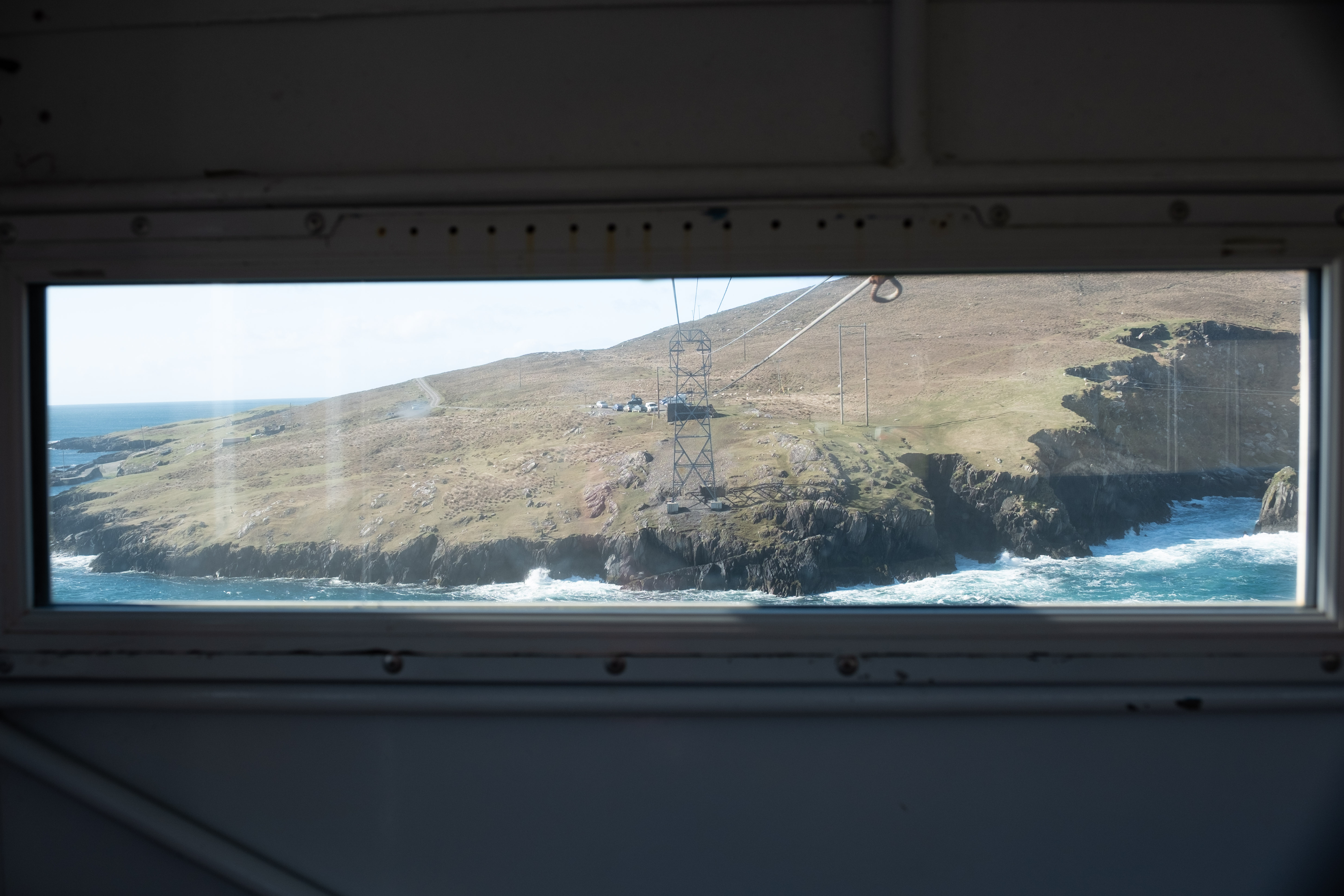
When I slide the doors open, the silence settles in.
Dursey has a road, houses and cars. But on every day I walked its length, the only voices were the sheep, the wind and the sea. The only road is quiet. The same cars, left behind, sit where they were on my last visit, near the cable car. One with its hood rusted open like a yawn, another parked neatly, as if its owner might return any minute.
Three villages stand on the island: Ballynacallagh, Kilmichael, and Tilickafinna. The houses tell the same story. Some slump into the earth, roofs caved in, while others wear fresh paint and trimmed hedges, waiting for their owners that I could not find.
A phone booth stands frozen in time. I wonder what its last call was about.
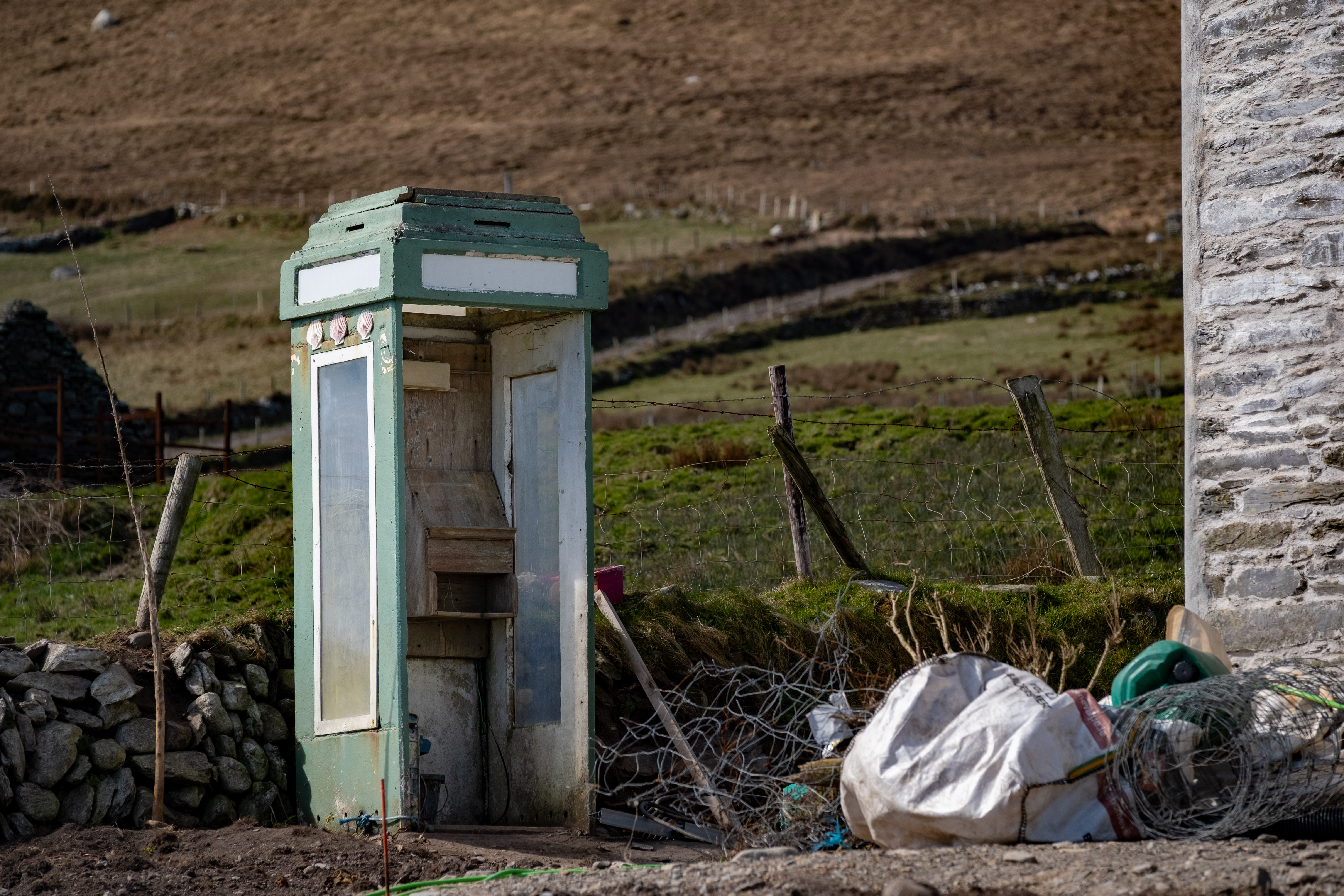

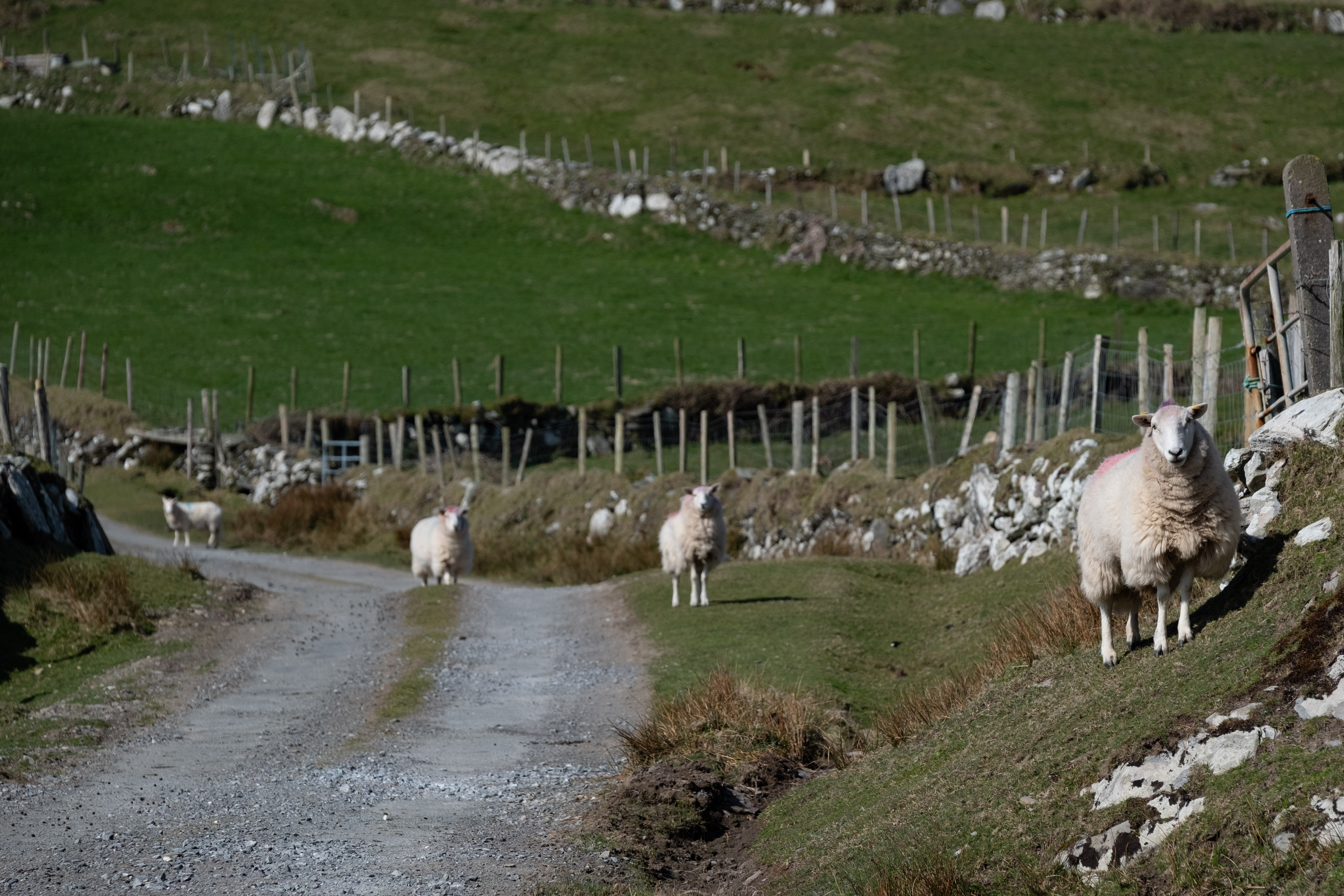
The sheep graze along the road or even amble down the centre of the lane, unbothered, a little wary though. Cattle watch from the hills, chewing slowly, indifferent. They don’t need the cable car or the shops.
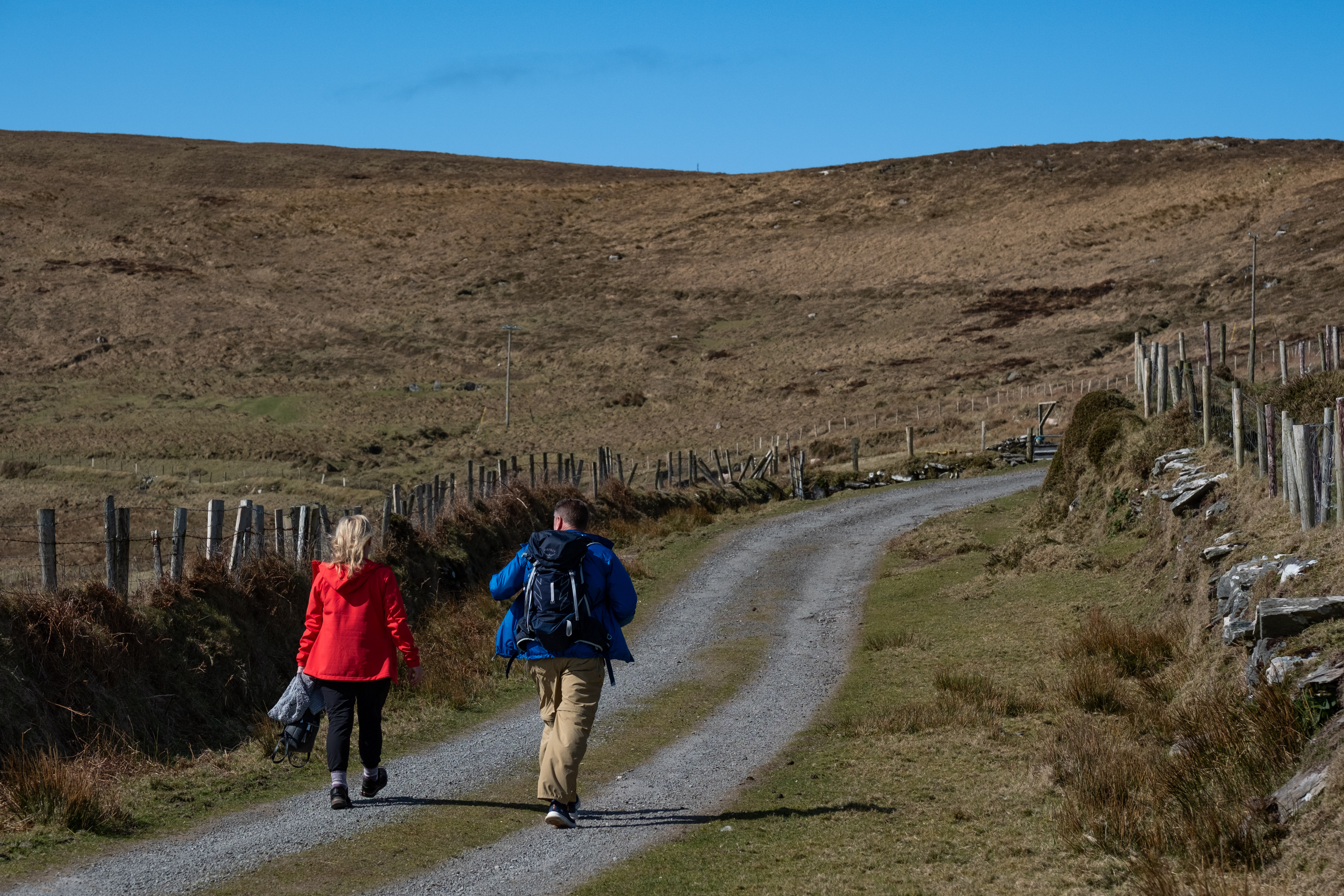
The only humans I meet are hikers, but they’re just passing through. We exchange nods – “lovely day!”, traditional greeting in Ireland when the Sun is out and the clouds are nowhere to be seen – and then they’re gone, leaving no trace.
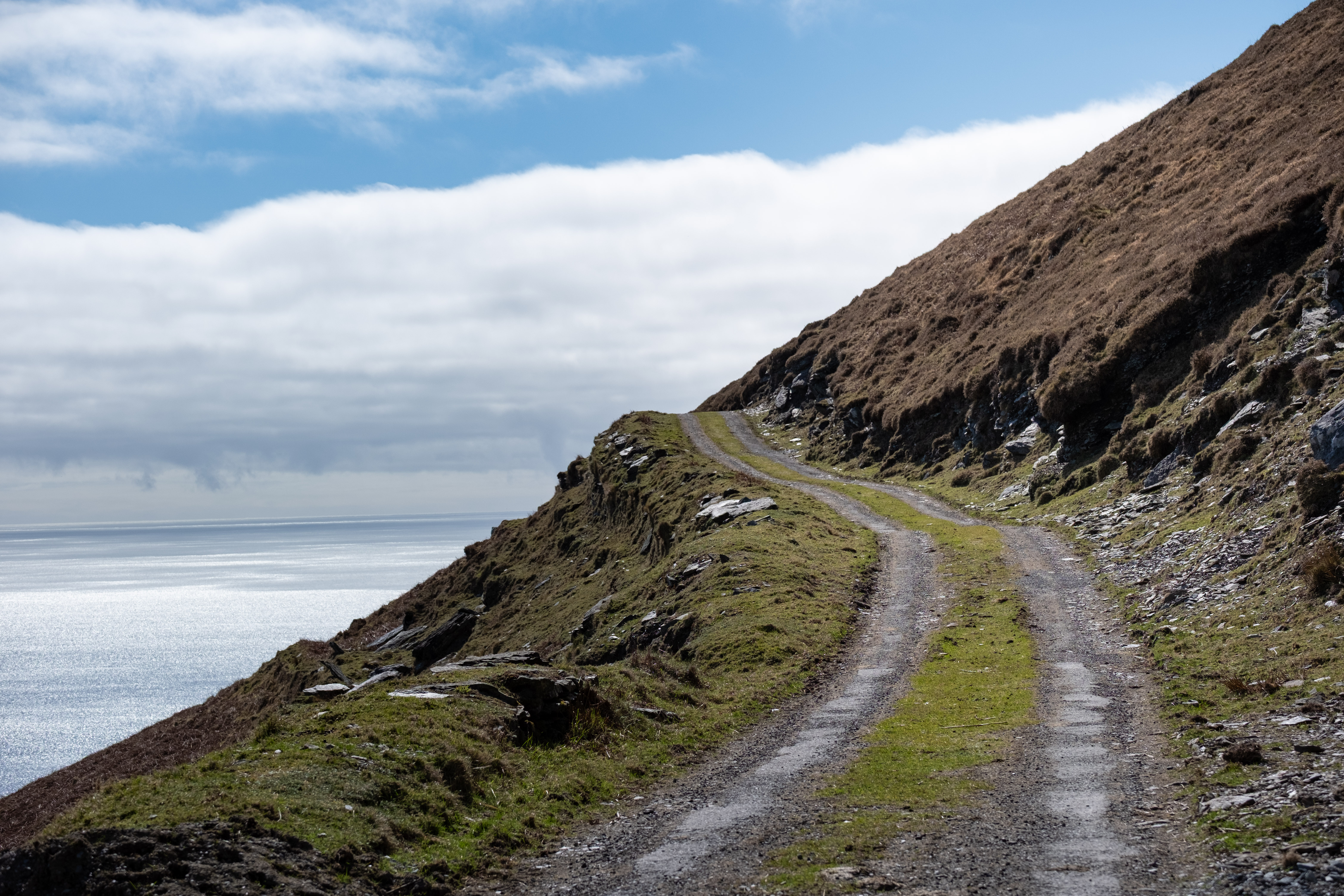
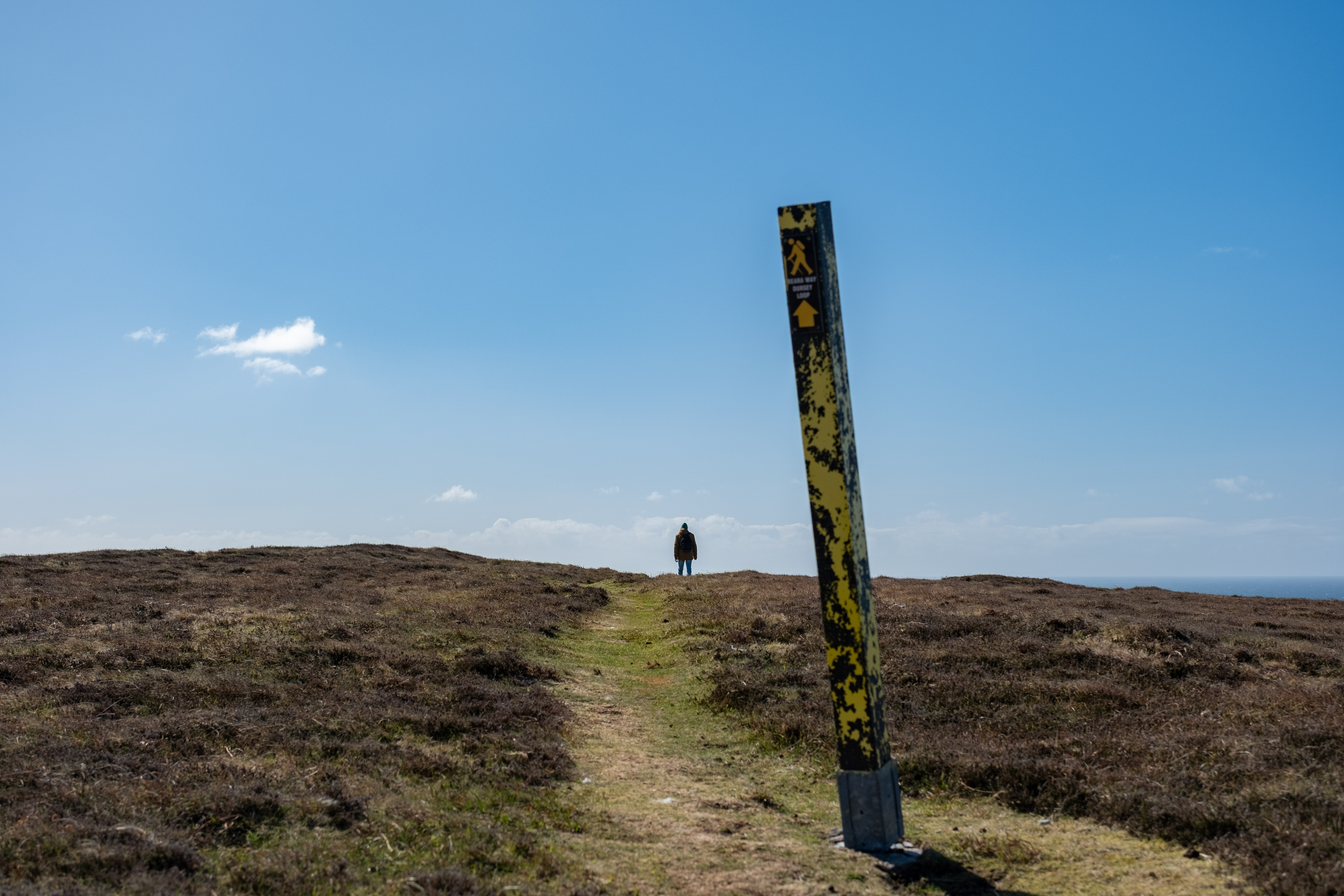
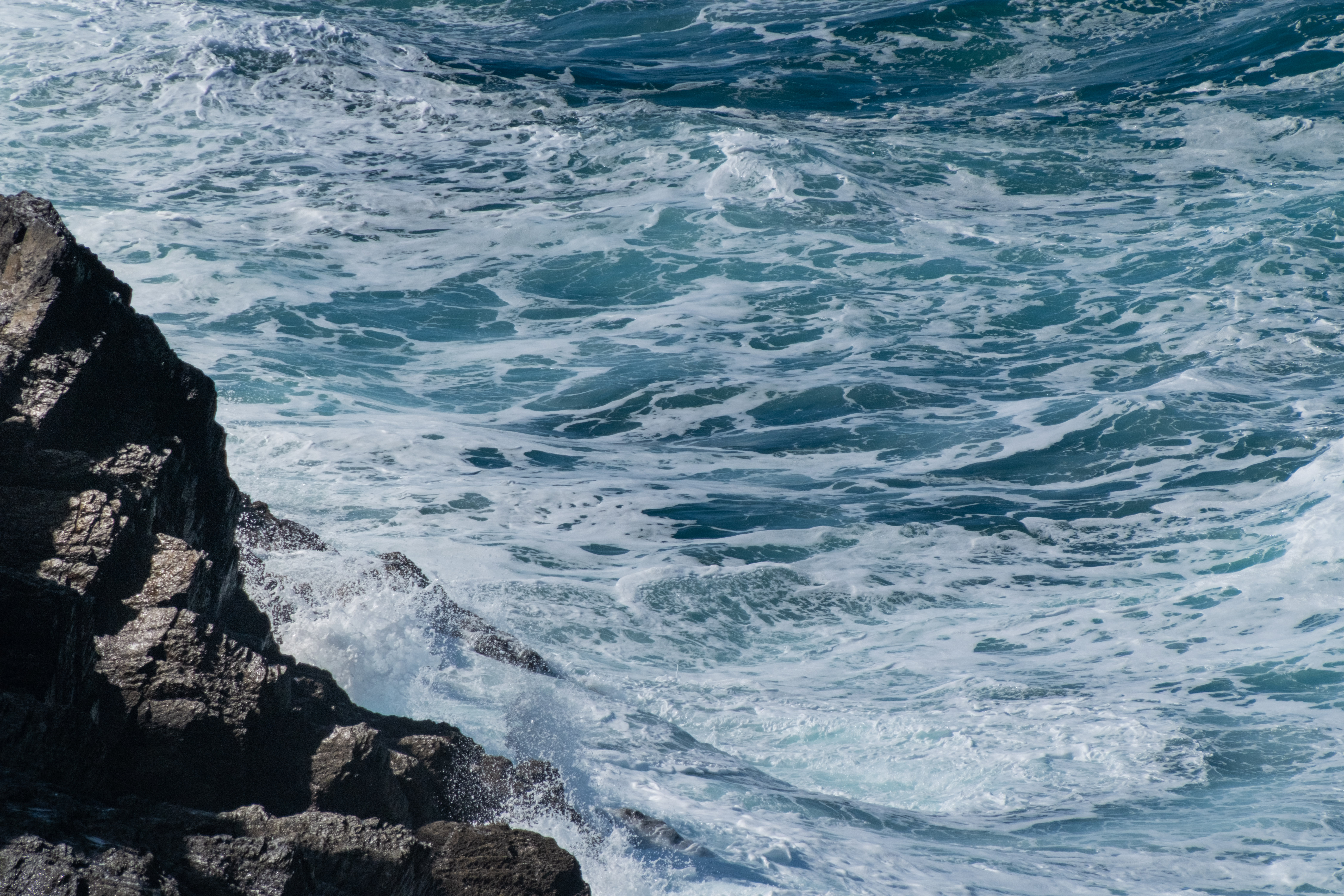
By the time I reach the western edge, where the cliffs plunge into the sea, the silence is complete. No engines, no voices—just the waves and the icy wind, working with the Sun to burn my face as I narrow my eyes to gaze at the never-ending ocean spreading before me.
As I walk back to the cable car, I spot the cemetery. The ruins of the old church is now welcoming graves in its holy core. The stones are worn smooth by Atlantic gales, names half-erased. Some graves are fresh enough to suggest that someone still tends to them, though I see no one. Others are only rocks with no names on it.
Dursey Island has witnessed some atrocities.
When it was used as a depot of Irish slaves for the Vikings.
Centuries later, when three hundred unarmed people were cast away in the sea by the British troops during the Dursey massacre.
And finally when the Famine came.
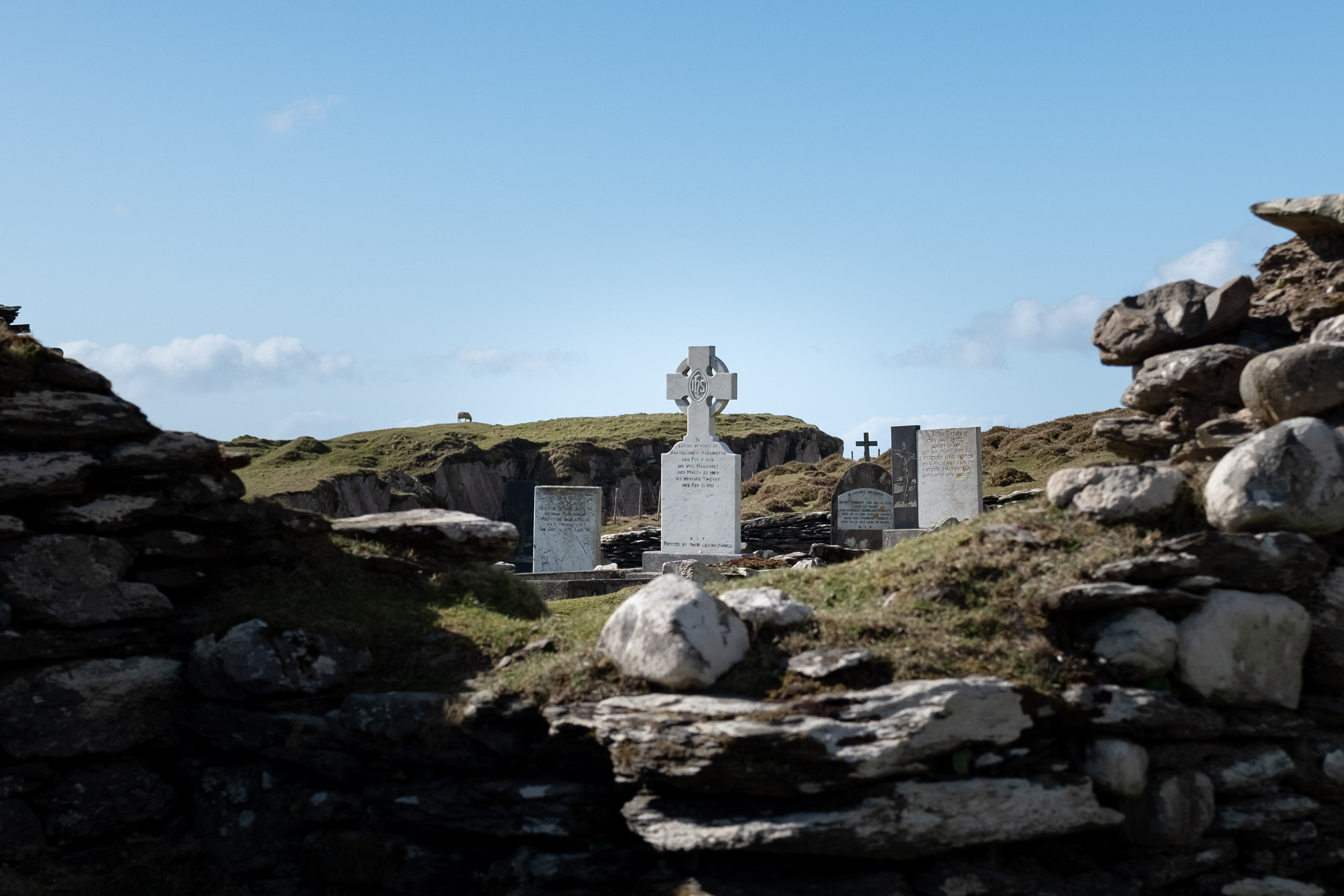
This is the island’s cruel joke: the only most permanent residents are the dead.
As I arrive to the cable car station, seeing my ride coming to me through the air for me, I notice that one car is gone. Only one road on the whole island and I missed it? How? I will certainly come back and wait by the cable car to meet the living ghosts of Dursey Island.
All photos credit to the author of the article Annabelle Hamil. No use allowed without her permission.

 Annabelle in Éire
Leave a comment